Open Meetings Laws and What Local Governments Must Do Publicly
Public bodies must hold open meetings, post notice, and disclose records to the public.
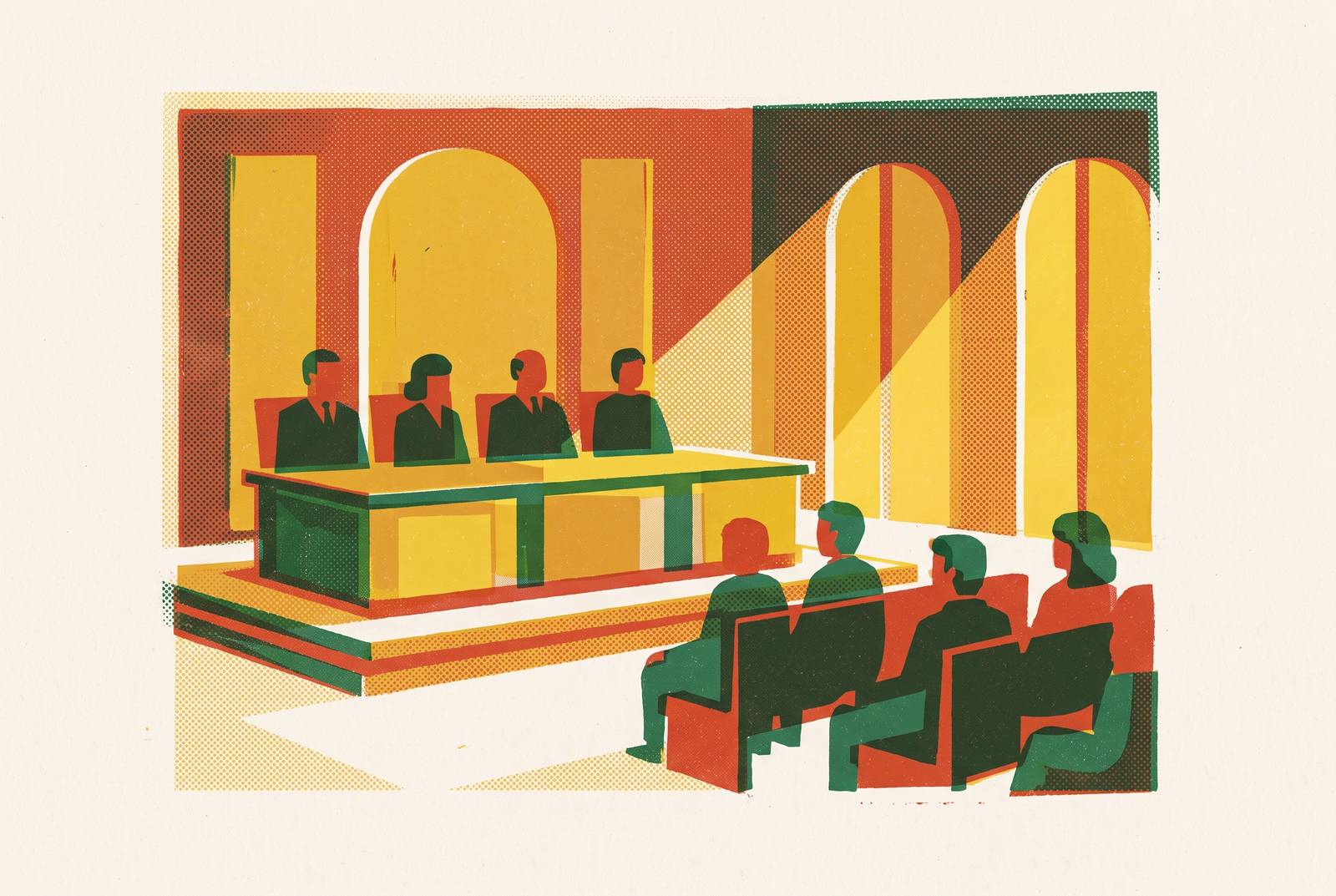
Every state in the country, plus the national capital, had an open meetings law on the books by 1976. That's not a patchwork of local experiments. That's a shared conviction, arrived at independently by fifty-one different legislatures, that public business belongs in public view. If a body of government is deciding something, citizens get to watch it happen, because these laws share the same core idea: public business belongs in public view.
New York's statute says this almost bluntly. Section 100 of the state's Open Meetings Law declares that "it is essential to the maintenance of a democratic society that the public business be performed in an open and public manner," and that "the people must be able to remain informed if they are to retain control over those who are their public servants." Texas leans on a founding-era statesman to make the same point in its 2026 Open Meetings Act handbook, quoting his warning that "a popular government without popular information... is but a prologue to a farce or a tragedy." Secrecy in government is a transfer of power away from the people who are supposed to hold it. It's a transfer of power away from the people who are supposed to hold it.
So what does that principle actually require, in practice, from the school board or the city council near you? That's the real question, and it breaks down into a handful of concrete obligations.
Which bodies these laws govern
The legal trigger is usually simple to state and slightly trickier to apply: a "public body" is generally any group of two or more members that needs a quorum to conduct public business and that performs a governmental function. City councils, town boards, village boards of trustees, school boards, and legislative commissions all fall under this definition in one state. So do committees and subcommittees made up of members from those bodies.
Texas draws a similar line in its 2026 handbook, covering local governmental bodies, state-level bodies, and their committees and subcommittees. Purely advisory bodies, the kind that only issue recommendations and can't take binding action on their own, sometimes fall outside the law's reach. That distinction matters. A citizen advisory panel that just floats ideas isn't always bound the same way a body that votes on contracts is.
Georgia's law skips the nuance and goes straight for teeth. All meetings of covered bodies "shall be open to the public," and if a body takes official action at a meeting that doesn't comply, that action "shall not be binding." In other words: break the rule, and the vote doesn't count. That's a real consequence.
The notice obligation: when and how local governments must announce their meetings
Notice is where the rubber meets the road, and the timing rules aren't uniform even within a single state's law. One state requires that for meetings scheduled at least a week out, notice has to be posted conspicuously at least 72 hours before the meeting starts. That's a hard number, three days, and it gives residents a real window to plan around.
But what about meetings called on shorter notice? One state softens the standard there: notice must go out "to the extent practicable" and get posted "a reasonable time" in advance. That's vaguer language by design, and it matters in practice, because a body that wants to slip a meeting past public attention has more room to argue "practicable" meant something less than 72 hours.
Texas's handbook goes further into the mechanics: what has to be in the notice (date, time, place, subject matter), how specific the agenda language needs to be, and where the notice physically has to be posted. That last point sounds like a technicality until you realize what it means on the ground. Notice posted in the wrong location, a bulletin board nobody walks past, a webpage nobody's told to check, can be just as defective as posting no notice at all. The law cares about whether the public could reasonably have found the notice.
Texas also updated its posting rules in 2025. House Bill 5534, passed that legislative session, amends the Texas Open Meetings Act to let county governmental bodies post notice through new methods. Open meetings law isn't frozen text from decades ago; rules like this shift periodically. Legislatures keep adjusting it.
Quorum, open sessions, and what "open" requires in the room
Quorum sounds like a dry procedural word, but it's the hinge the entire law swings on. Once enough members are present to constitute a quorum, the open-meeting obligations kick in, whether or not anyone intended to hold a formal meeting. Under Texas's Open Meetings Act, even an informal gathering of a quorum can count as a "meeting" that triggers all the notice and openness requirements. Officials can't dodge the law by calling something a lunch instead of a session.
Once a meeting is happening, "open" carries physical requirements too. One state's law requires public bodies to make "all reasonable efforts" to hold meetings somewhere with barrier-free access, somewhere that can actually fit the members of the public who show up. And when videoconferencing enters the picture, states have grappled with how to preserve meaningful public access alongside the convenience of remote participation. The law hasn't let remote meeting technology become an excuse to shut the physical doors.
Recording rights round this out. Under one state's law, any open meeting has to be open to being photographed, recorded, broadcast, or webcast by members of the public. A public body may set reasonable rules governing how recording is conducted, but it can't ban recording outright. The law doesn't just say "you may attend." It says "you may bring a camera." Those are different rights, and the second one is the one that ends up mattering when a dispute lands in front of a judge months later.
Minutes and records: what governments must document and make available
Attending a meeting is one way to know what happened. Reading the minutes afterward is another, and the law treats that second path as equally protected.
One state requires minutes or a recording to be posted online no later than two weeks after the meeting. What counts as adequate minutes has a floor: they need to state what actions were taken clearly enough that someone could identify and prove exactly what happened, and they need to document that any required conditions, quorum being the obvious one, were actually met.
Minutes don't have to be verbatim. A summary satisfies the requirement, as long as it captures the substance of what was decided and confirms the process was legitimate. And once those minutes exist, they're public documents. Anyone can request them, the same way they'd request any other government record.
What closed sessions permit, and where they end
Closed sessions exist, and they're legal, but the list of reasons a body can use one is closed. That's the piece easy to misunderstand: officials can't invoke "executive session" as a catch-all whenever a topic gets uncomfortable. The permissible categories are spelled out in statute, and if the topic doesn't fit one of them, it belongs in the open meeting.
California's Brown Act states this interpretive rule almost like a instruction to judges: exceptions authorizing closed sessions get "construed narrowly," while the general requirement of openness gets "construed liberally in favor of openness." That's not just California's philosophy. It's the working assumption behind most state frameworks, even where it isn't spelled out in the statute's own text.
Texas's 2026 handbook lays out its list of permissible closed-session categories, which the handbook details across several defined topics. A new category landed in 2025: deliberations about cybersecurity measures, policies, or contracts meant specifically to protect a critical infrastructure facility. That's a sign of the times, frankly, added to a statute that's otherwise built around much older concerns like land deals and personnel disputes.
Texas also pulled a category out in 2025. House Bill 1620 repealed §551.083, which had let certain school boards go into closed session to consult with a representative of an employee group. The list doesn't just grow. It gets trimmed too, and both directions matter if a resident is trying to figure out what's currently legal versus what used to be.
Public comment rights: what the law guarantees versus what boards choose to allow
Open meetings statutes, by themselves, generally don't give the public a right to speak, more than any other provision in this entire area of law. They guarantee the right to watch. Attending, recording, reading the minutes, these are baked into the law directly. A microphone at public comment time is usually a separate legal question entirely.
That right to speak typically comes from other statutes layered on top. Certain government actions require a formal public hearing before they can move forward. Certain kinds of governing boards are required, under separate laws, to hold regular public comment periods at their meetings. But the open meetings law alone doesn't promise anyone a turn at the podium.
Pennsylvania's Sunshine Act is unusually direct about closing that gap. It gives the public an explicit right to comment on issues "that are or may be before the board," and it requires agencies to provide a reasonable opportunity for residents and taxpayers to weigh in before a decision gets made. Pennsylvania also lets agencies set reasonable limits on that comment, three minutes per speaker is a common structure allowed under the law. So the right exists, but it comes with guardrails a board can set.
One might argue that three minutes isn't much time to make a case on a zoning variance or a budget line. Maybe it isn't. But the alternative, no guaranteed comment period at all, is the default in jurisdictions that rely purely on the open meetings statute without a separate comment-rights law layered in. Check that gap on a state-by-state basis before assuming a right exists just because a meeting is open.
What happens when a government body breaks the law
Violating an open meetings law isn't a paperwork slap on the wrist. The consequences range from lawsuits and court orders to civil penalties, attorney fees, and outright voided decisions.
Some state open meetings statutes allow business conducted in an unauthorized meeting to be voided entirely, with additional consequences layered on top in certain cases. California's Brown Act lets courts award reasonable attorney fees to a plaintiff once a violation gets confirmed, which shifts the financial calculus for anyone considering whether to sue over a closed-door decision. And Georgia writes the nullification remedy straight into its statute: official action taken at a meeting that wasn't open as required "shall not be binding," full stop.
That last point deserves attention. A law that just says "you shouldn't do this" is a suggestion. A law that says "if you do this, the decision doesn't count" is enforcement built into the structure itself. It means a resident doesn't have to convince a court to invent a remedy. The remedy is already sitting in the text.
How officials are trained, and why gaps in that training affect citizens
Officials aren't born knowing this law. They get trained on it, or they're supposed to, and how much training they actually receive varies enough to matter.
New York's Assembly Bill 2025-A6487 would expand training requirements for local municipalities on open meetings compliance. Under the bill, at least one hour of that training would have to come specifically from the Committee on Open Government or another qualified entity, focused on open meetings law itself rather than general governance topics. If a municipality skips that requirement, the bill would require a justification explaining why.
The bill also raises the bar for a specific group: county planning board members, who would be required to meet a five-hour annual training minimum. That's a modest increase on paper. Lawmakers keep circling back to training requirements because gaps in officials' understanding of the law translate directly into gaps in what citizens actually get to see. A board member who doesn't know minutes have to be posted within two weeks, or doesn't know the closed-session list is exhaustive rather than a suggestion, isn't malicious. He's just untrained, and the public pays the cost either way.
The bill also addresses accountability around training compliance for counties that fall short of the requirement. That's a small provision, but it closes a door that would otherwise let training slide quietly with no one accountable for the decision.
How citizens can use open meetings laws to observe
So where does this leave someone who wants to actually use these rights, rather than just know they exist? Start with the notice requirement: if a meeting is scheduled a week or more out, it has to be posted at least 72 hours ahead under New York's law, and posted somewhere the public can genuinely find it. Checking that posting location is a fair first test of whether a body is complying.
From there, showing up matters, and so does bringing a recorder or a phone, since the law in certain states protects that right explicitly. Reading minutes after the fact fills in gaps for meetings a resident couldn't attend, and requesting those minutes is a right that doesn't depend on anyone's goodwill. Ask which specific statutory exception justifies it if a board slides into closed session. The list is exhaustive, and a body that can't name the exception may not have one.
None of this requires a law degree. It requires knowing the specific mechanics: what triggers a quorum, what has to be in a notice, what a closed session can and can't cover, and what remedy exists when a body gets it wrong. That knowledge is the actual tool. The statutes only work as protection for citizens who know precisely what they're entitled to ask for.