Saul Alinsky Model in Community Based Organizing
Alinsky's power-building model turns grassroots frustration into lasting institutional change.
Communities rarely fail to change their circumstances because nobody had the right idea. They fail because nobody organized enough power to force that idea into law. That gap, between a good cause and an actual legislative outcome, is what the Saul Alinsky model was built to close, and his work was a power-building model, not a protest movement. Alinsky didn't ask which argument would convince people. He asked who held power, who didn't, and how that second group could get some.
Alinsky was born in Chicago in 1909 and trained first as a criminologist, studying how power moved between those who held it and those who didn't. His final book, "Rules for Radicals: A Pragmatic Primer for Realistic Radicals," published in 1971, took everything he'd learned in those campaigns and turned it into a transferable method for the next generation of organizers.
The diagnosis still holds: the issue was never a shortage of good ideas, it was a shortage of organized power to carry them. Every section that follows is really just unpacking what that means in practice, mechanic by mechanic.
The three interlocking mechanics that make the model work: gradualism, infiltration, and the dialectic process
Alinsky's model runs on three mechanics, and each one cuts against what an impatient activist would want to do. Together they explain how a scattered group of aggrieved people becomes an organization that institutions have to take seriously.
The first is gradualism. A win that trains people and builds lasting structure matters more than a fast win that leaves nothing behind once the headline fades.
The second is infiltration. The leverage comes from institutions that already have standing, reach, and trust.
The third is the dialectic process: grassroots organizing that teaches people to confront government and corporations on their own behalf. The deeper point here is that no single issue is the goal. Power is the product.
These three mechanics depend on each other. Gradualism only works if the organizer has infiltrated institutions durable enough to sustain years of patient work. Infiltration only produces something useful if it generates the relationships that feed the dialectic process. And the dialectic process is what generates the cumulative wins that make the patience of gradualism worth anyone's time.
Self-interest as the fuel, and native leadership as the engine
Of everything Alinsky wrote, the assumption of self-interest has aged the best, because it answers a question every organizer eventually has to face: why would anyone keep showing up? Alinsky's answer was unglamorous but honest. Modern society runs on compromise between self-interested individuals acting in public, and people get involved in a campaign when they believe there's something in it for them.
That's not cynicism about human nature. Listening comes before any pitch, since nobody can appeal to a self-interest they haven't yet uncovered.
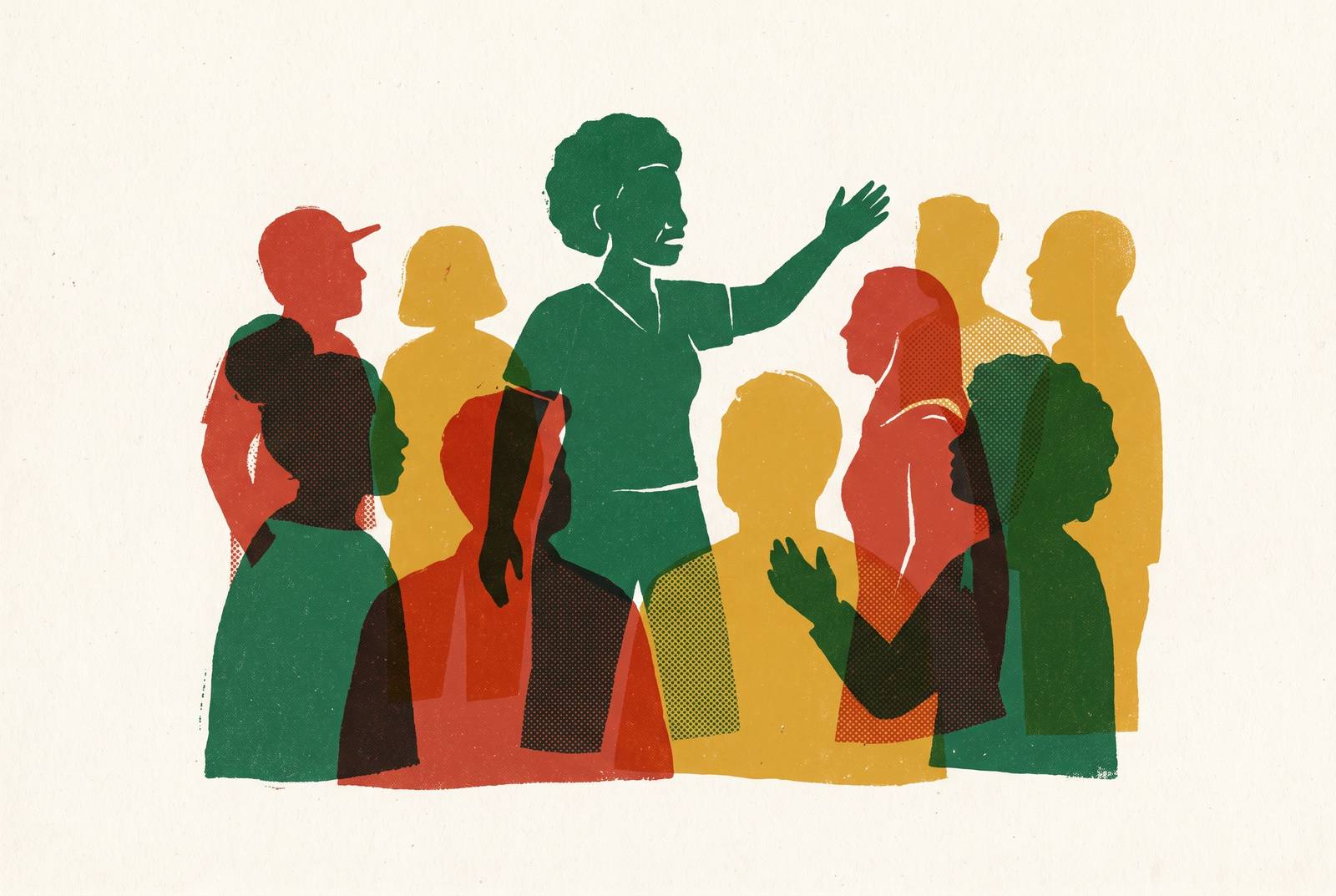
Self-interest explains why people join. Alinsky's tradition holds that lasting change comes from leaders who are already part of the community, not from leaders imported from outside it. Success gets measured by whether the community can keep running the organization once the outside organizer has left.
The Alinsky model treats the organizing staff as disposable by design, while the local leadership structure is built to be permanent. That distinction matters enough to flag here, because it resurfaces later when civic technology platforms get evaluated against this same standard.
Put self-interest and native leadership together and you get an answer to why Alinsky-style organizations tend to outlast single-issue campaigns: motivation comes from something concrete each person wants, and structure comes from leaders who have a reason to stay once the cameras leave. Alinsky's answer is the dialectic process itself: the coalition doesn't hold together through shared ideology, it holds together through a shared habit of winning together, repeatedly, on issue after issue.
The organizing sequence: from relationship-building to institutional power
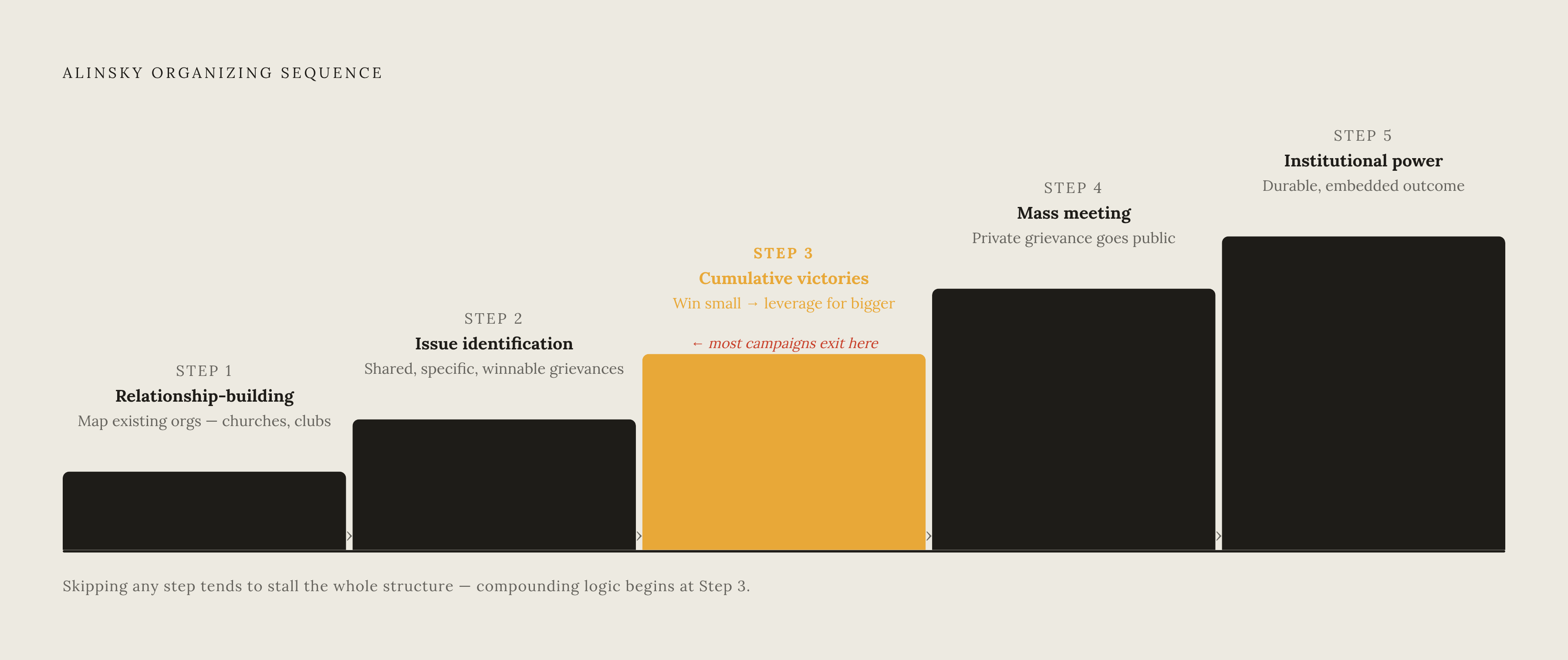
The principles above only matter if they translate into an actual campaign sequence, and Alinsky's model specifies one: relationship-building, issue identification, cumulative small victories, the mass meeting, and institutional power. Skipping a step tends to stall out the whole structure.
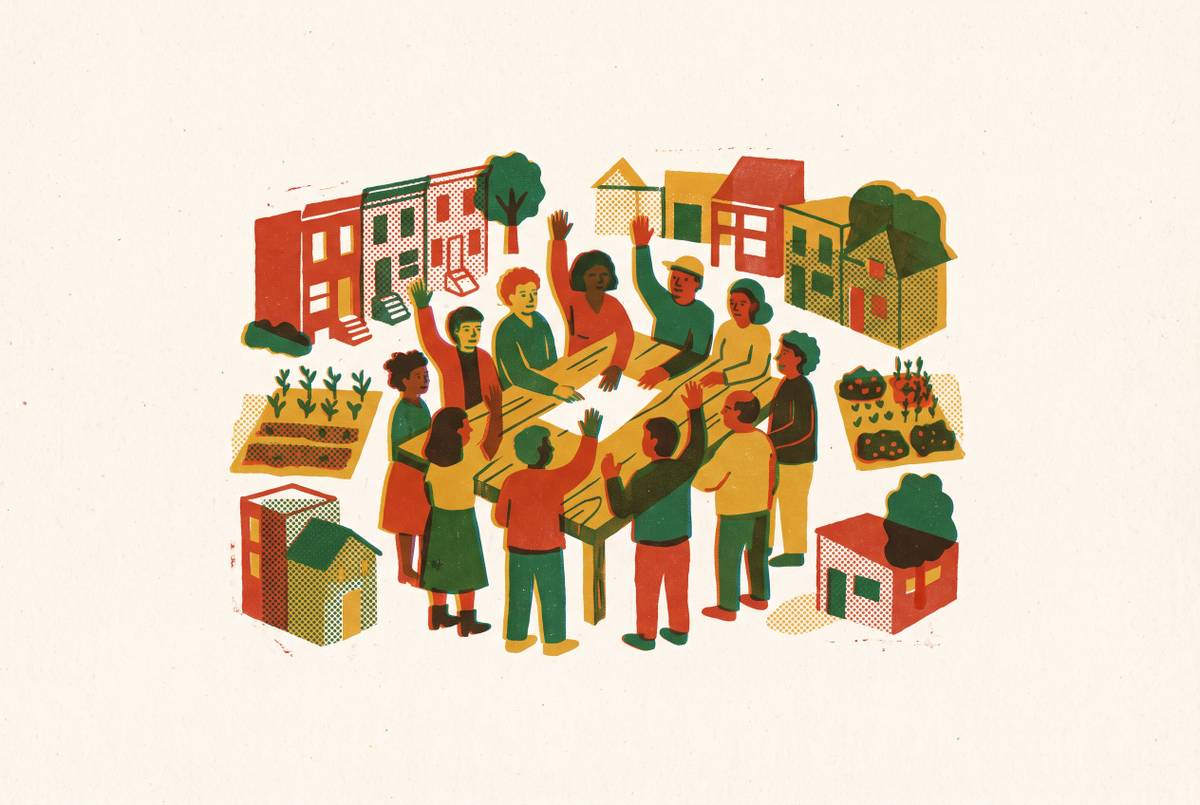
Relationship-building comes first. The organizer doesn't walk in with an agenda. They map the community's existing organizational base, churches, service organizations, local clubs, and enter through it, because those institutions already carry trust, regular attendance, and leadership structures the organizer would otherwise have to build from nothing.
Issue identification follows. Through listening, the organizer surfaces grievances that are widely shared, specific, and winnable. Not the single biggest injustice in the community, necessarily, but the one capable of producing a first real victory.
Cumulative victories come next. The campaign starts with something easily winnable, then uses the energy from that win to take on bigger issues. Each win recruits more participants and raises what the organization is willing to attempt.
This sequence also explains, structurally, why petitions so often go nowhere. It skips the relationship-building and the cumulative-victory phases that give a demand its credibility and its staying power. That gap separates a petition that dies in a drawer from a campaign that actually moves a legislature, visible in the same sequence in organizations like YIMBY Action, CivicLex, and Stewardship Utah.
Three contemporary organizations running the Alinsky sequence
Theory is only useful if it still produces results, and three contemporary organizations, each in a different policy domain, show the Alinsky sequence running today.
YIMBY Action is the most direct large-scale replication of Alinsky mechanics currently operating, focused on housing policy. California's SB 79, written by San Francisco State Senator Scott Wiener, could bring multifamily housing to neighborhoods across the state, and its passage was described as the culmination of years of coalition work, with California YIMBY leading the lobbying and YIMBY Action chapters mobilizing in-district support at the moments it mattered most. That's gradualism (years of coalition-building before the win), infiltration (working inside the legislative process itself), the dialectic process (issue-by-issue wins building toward bigger legislation), and native leadership (constituents mobilized in their own districts) all visible in a single bill.
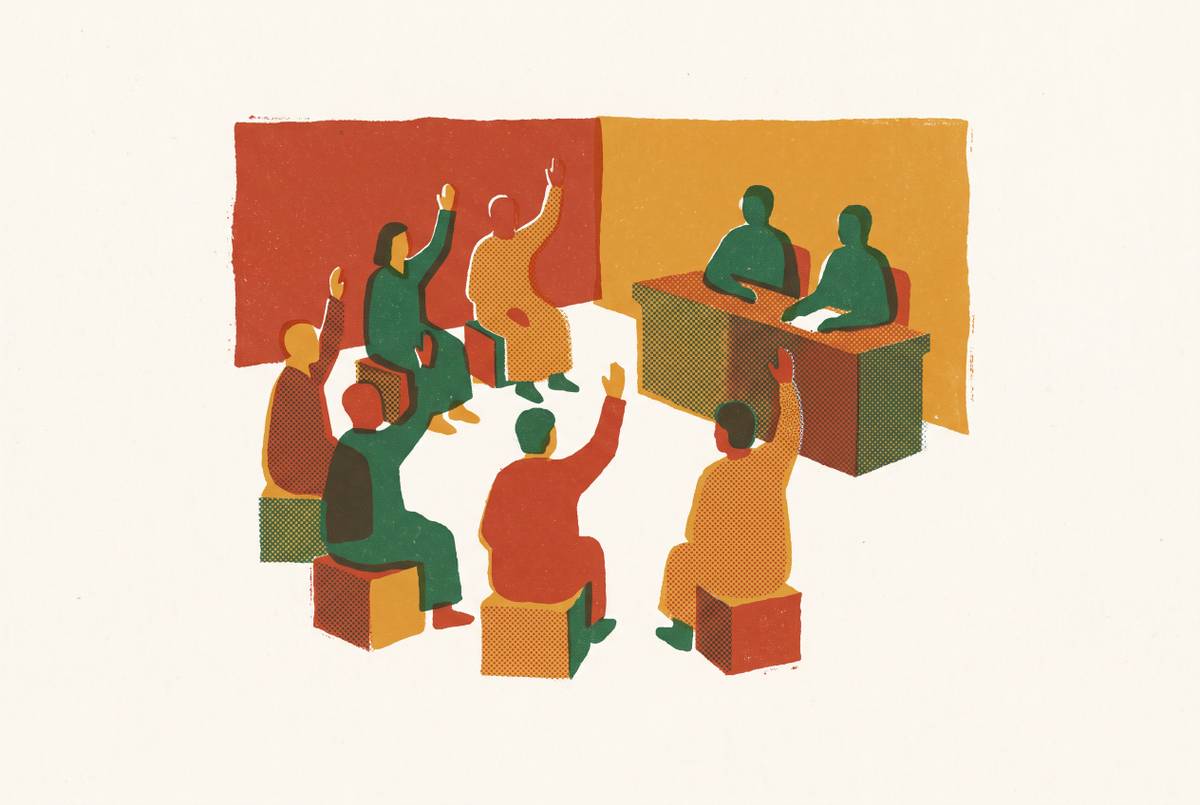
CivicLex, based in Lexington, Kentucky, applies the model to institutional design. The Alinsky mechanic on display here is native leadership in its purest form: community members do the actual deliberating, while CivicLex builds the structure and then steps back, rather than staying at the center of the process indefinitely.
Stewardship Utah, working on climate policy, shows the long game most clearly. Its work has involved infiltrating the rulemaking process across seven years rather than forcing a single dramatic confrontation, with each legislative session treated as a cumulative step rather than a fresh start. That's gradualism operating exactly as Alinsky described it, measured not in weeks but in years.
Three different domains, three different tactics on the surface, but the same underlying architecture produces all of them.
The ballot initiative and who controls access to it
The ballot initiative is the most direct legislative tool available to ordinary citizens under the Alinsky framework, letting them act as legislators themselves. Missouri offers the clearest live case for understanding both its power and its fragility.
Republicans have controlled Missouri's legislature for more than two decades, yet they haven't controlled all of state lawmaking in that time, largely because Missouri lets citizens petition directly for ballot referendums. Since 2020, Missouri citizens have used that pathway to legalize marijuana, raise the minimum wage, guarantee paid sick leave, expand Medicaid, and revoke the state's abortion ban. Those are five separate wins achieved by citizens acting as direct legislators, entirely outside the normal path through elected representatives.
But what happens when the institution that grants that access decides to restrict it? A proposed rule in Missouri would make the citizen ballot pathway harder to use than the standard legislative pathway, reversing the logic the ballot initiative was designed around. Missouri shows what winning on issues looks like without also winning the power to protect those wins afterward, a reminder that the ballot box alone isn't durable power unless something stands behind it.
What civic technology can do in the Alinsky framework
If organizing power is the real product, the natural next question is whether digital tools can help build it faster. Mostly not yet, and not in the way that matters most.
A 2026 systematic review of 158 civic technology platforms, published in Frontiers in Political Science, found a lopsided landscape. Only a minority explicitly support knowledge co-production or co-creation, and actual decision-making processes are rarely described, which the review takes as a sign that collaborative knowledge generation remains marginal across the civic tech field as a whole.
Translated into Alinsky's sequence, most civic tech is doing Step 1 and Step 2 work: it helps with listening and grievance identification. In the UK, Demos is running one of the largest live trials of this kind: "Waves," a €1 million project testing new technology in local democracy, aims to bring people together on contentious local issues and rebuild trust in local government.
AI's role in policy drafting for the Alinsky organizer
Where civic tech generally stalls, AI is starting to make a specific and useful contribution: not replacing the organizer, but removing the technical wall that has historically kept non-lawyers from producing proposals a legislature can act on.
The OECD's report "Governing with Artificial Intelligence" draws on 200 government AI use cases across 11 core functions and finds AI most common in public service delivery, justice functions, and civic participation. AI systems can generate preliminary drafts of legal and policy documents using templates and existing legislation, helping new text stay consistent with established standards while saving considerable time. They can also cross-reference a new draft against current law, flagging potential conflicts and cutting down on human error in the process.
For an Alinsky organizer, this matters because the model always requires translating a community's demand into a form decision-makers can actually receive and act on. The legislative draft functions as the formal handshake between an organized community and the institution it's pressing. AI makes that handshake possible without hiring a lawyer first. Data & Society launched AI Civics in May 2026, a program built to extend and strengthen the public's voice in how AI itself gets designed and deployed, backed by $3 million from Humanity AI. The framing matters: it treats the public not just as AI's users, but as civic actors with a say in steering the technology itself.
None of this is risk-free, and the Alinsky organizer should go in with eyes open. The OECD and a 2026 APSA preprint both flag a real tension between public service values and algorithmic optimization, a conflict no piece of software resolves on its own. Most community proposals die for one of those two reasons, and addressing both at once is what gives an idea a real shot.
Where the Alinsky model falls short
None of this is reason to treat Alinsky's framework as finished or flawless, and the honest version of this argument has to say where it falls short.
Margaret Post's chapter "Alinsky Style Organizing," published in the 2018 "Handbook of Community Movements and Local Organizations in the 21st Century," makes the case for the continued relevance of Alinsky's core tenets while also naming where his approach struggled with racial and gender barriers to building power. When an organizer's choice of which local leaders to cultivate went unexamined, it tended to reproduce the same hierarchies the organizing was supposed to dismantle.
Contemporary organizing has responded by making the leadership-development phase explicitly attentive to equity, not as an ideological add-on but as a practical necessity. Each of these can quietly erode the model's core insistence on leadership that is local and self-sustaining, unless organizers actively guard against it.
The piece of Alinsky's thinking contemporary organizers contest most is his means-and-ends pragmatism, his argument that those closest to a conflict care least about the morality of the methods used to win it. None of these critiques invalidate gradualism, infiltration, or the dialectic process. They identify the conditions under which those three mechanics need to be applied with more care, not abandoned.
Turning citizens' ideas into actual law
The distance between a shared grievance and an actual law is a sequence, and the first and most useful thing a citizen can do is learn what that sequence actually is.
The steps are learnable and repeatable: find others who share the specific concern, which is relationship-building; identify the smallest winnable version of the issue, which is gradualism; use that first win to recruit more people and raise the group's ambition, which is the cumulative-victory phase; and translate the resulting community consensus into a form decision-makers can receive and act on, which is the legislative draft. Because turning a community's rough consensus into a credible, properly structured legislative proposal has always required a kind of technical and legal fluency most organizers simply don't have.
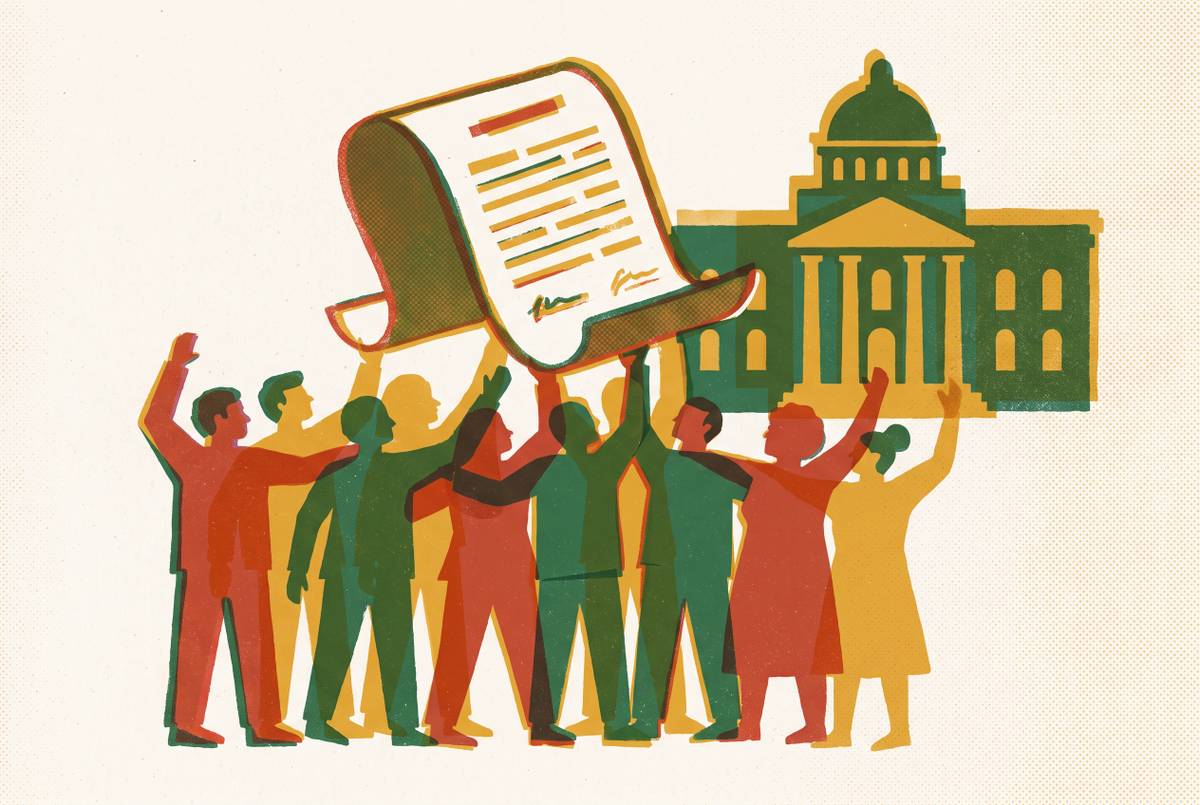
This is precisely where AI-assisted bill drafting changes the citizen's position. Verified community co-signatures do the work Alinsky assigned to the mass meeting: they turn private grievances into something public, demonstrate the demand is widely shared, and give an elected official a reason to treat a proposal as something that matters politically.
Local and neighborhood-level democracy remains, as Alinsky's model always recognized, the most underserved layer of civic participation. Zoning, parking, transit, local services: these are the issues that shape daily life most directly, and they're also the ones where organized constituent pressure is most likely to actually move an elected official. The model's central bet, that ordinary people, properly organized, can build enough power to change the rules they live under, has been tested across decades and across very different domains. The tools available to support that work have never made the hardest step, getting from a shared idea to an actual draft bill, more within reach than they are now.