Why Formerly Incarcerated People Face Voter and Civic Participation Barriers
A patchwork of state laws locks millions of working Americans out of the ballot box.
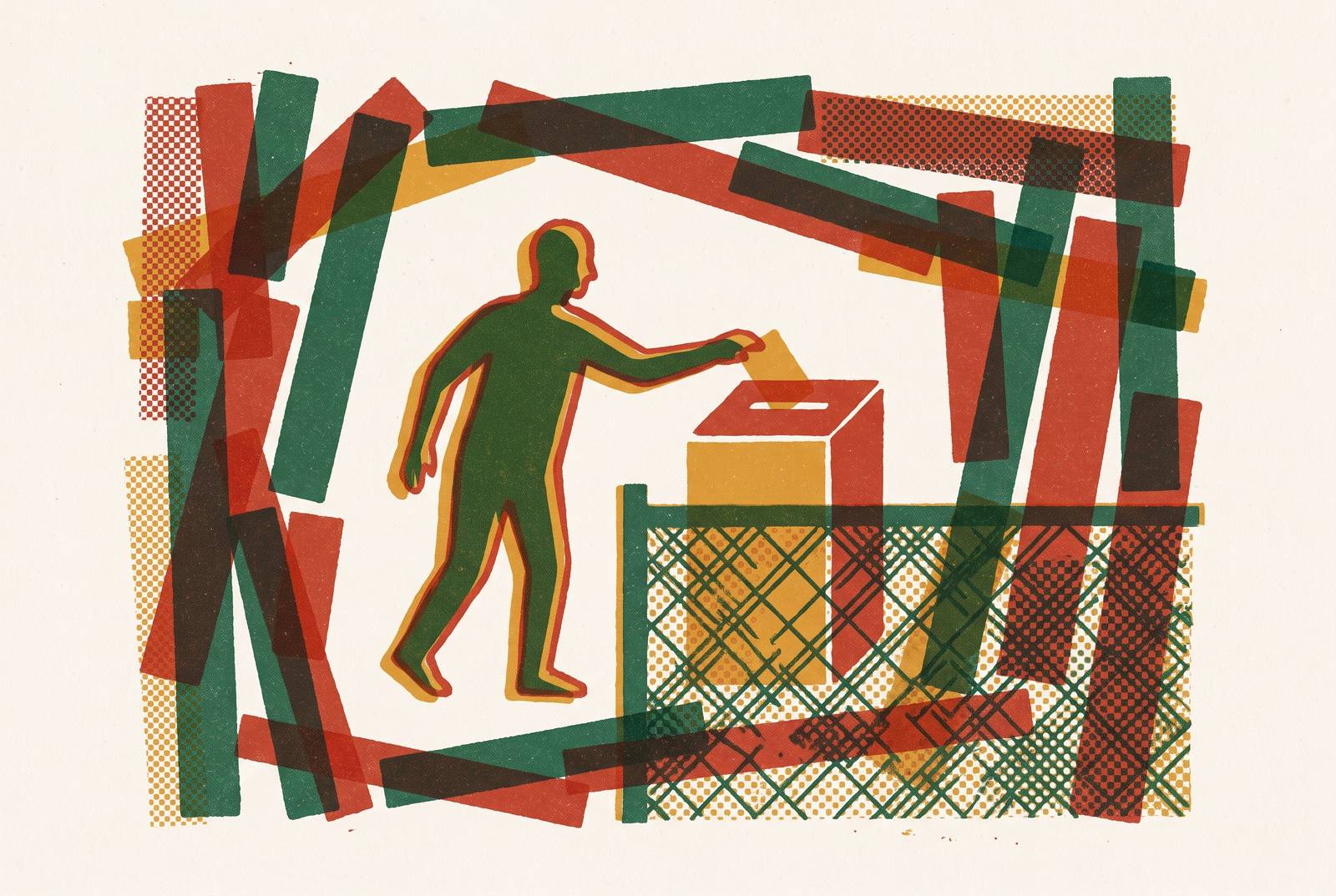
Felony disenfranchisement is the formal starting point of a much longer story about civic exclusion in a country divided into separate jurisdictions, and it works differently depending on which state line a person happens to live behind. Whether someone convicted of a felony can vote, and when, is a matter of geography as much as law. This piece looks at both layers of that exclusion: the statutes that strip the right to vote, and the quieter, harder-to-measure barriers that keep people from exercising that right even after it's restored.
Felony disenfranchisement laws by state
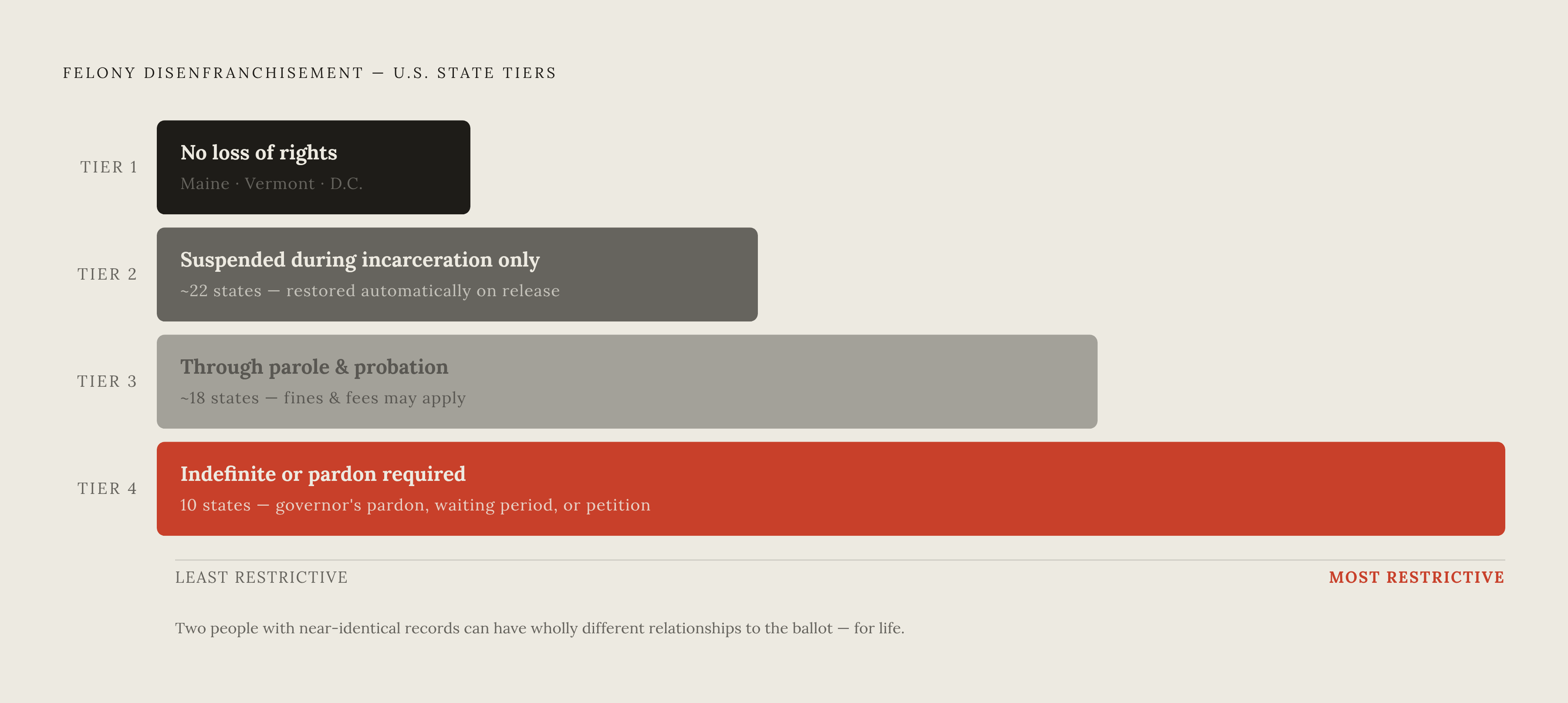
NCSL's September 2026 brief sorts the country into four tiers, and the distance between the first tier and the last is enormous. At one end sit Maine, Vermont, and Washington D.C., where a felony conviction never touches the right to vote, not even during incarceration. Move one tier over: a large share of states, close to half the country, suspend voting rights only while someone is actually in prison. Rights are restored the moment they walk out. A third group holds rights in suspension through the full completion of parole and probation before restoring them, and in some of these states that restoration is conditioned on paying off fines, fees, or restitution in full. Then there's the last tier: 10 states where rights can be lost indefinitely for certain crimes, or where getting them back requires a governor's pardon, a waiting period, or some additional petition.
A detail easy to miss here: "automatic restoration" does not mean automatic re-registration. Even in states where the law restores someone's rights the day they're released, nothing re-adds their name to the voter rolls. The individual still has to go through the ordinary registration process, the same one every other citizen uses. Automatic" describes the legal status, not the paperwork. That distinction matters because it puts the burden of initiative back on the very people the law claims to have already fixed things for.
What comes out of this patchwork is a country where millions of Americans, working, paying taxes, raising families inside their own communities, are barred from voting under laws their neighbors voted on and their officials enacted. Two people with near-identical records, one in Vermont and one in a tier-four state, can have completely different relationships to the ballot box for the rest of their lives.
Roots of these laws in race
Felony disenfranchisement, in its most severe forms, wasn't written to manage crime. It was built, deliberately, to suppress Black political participation, and that founding purpose still shapes who carries the weight of these laws today.
Virginia's constitutional convention in the early twentieth century shows how this worked. Delegates imposed a lifetime voting ban for felony convictions and paired it with poll taxes, literacy tests, and so-called "understanding" requirements. The combined machinery did its job almost immediately: it disenfranchised Black voters en masse and cut the prior number of white voters roughly in half. That wasn't a side effect. It was the design working as intended, and the historical record from that era makes the intent hard to dispute.
The disparity that design produced hasn't faded with time. Nationwide, one in every 22 Black adults is barred from voting because of a felony conviction, and in five states more than one in ten Black adults can't vote at all, figures that come from the Sentencing Project's Kara Gotsch. One might argue that felony disenfranchisement today is simply a race-neutral consequence of who commits crimes, nothing more. But the legislative record from Virginia and states like it answers that directly: these laws were drafted at a moment when race-neutral language was the only available cover for an explicitly racial goal. A law can be colorblind on its face and still have been engineered, clause by clause, to land on one population far harder than another.
The scale of who is affected, living outside prison walls
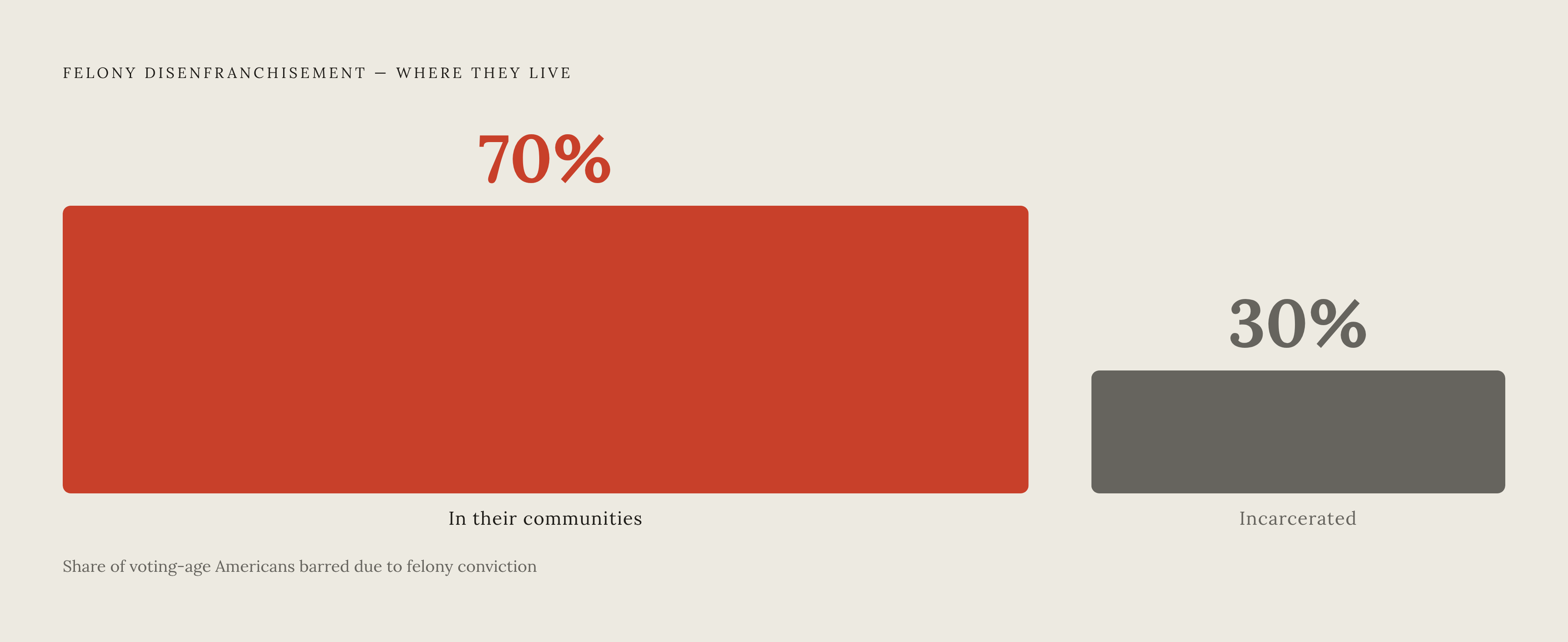
The assumption that felony disenfranchisement is mostly a story about prisons doesn't hold up. It isn't. Seventy percent of voting-age Americans banned from voting because of a felony conviction are currently living in their own communities, not behind bars, Kara Gotsch, Executive Director of The Sentencing Project, has said. That means the overwhelming majority of people affected by these laws are neighbors, coworkers, and parents, not inmates.
Missouri's House Bill 1871 puts a human face on that statistic. Gov. Mike Kehoe signed the bill, effective August 28, 2026, carving out exceptions for people convicted of certain nonviolent crimes who haven't yet finished parole or probation. The Sentencing Project estimates the law will restore voting rights to tens of thousands of Missourians on parole or probation, though the organization is careful to frame that as an estimate, not a certainty. Even with that restoration, more than 10,000 Missourians on probation or parole will still be shut out.
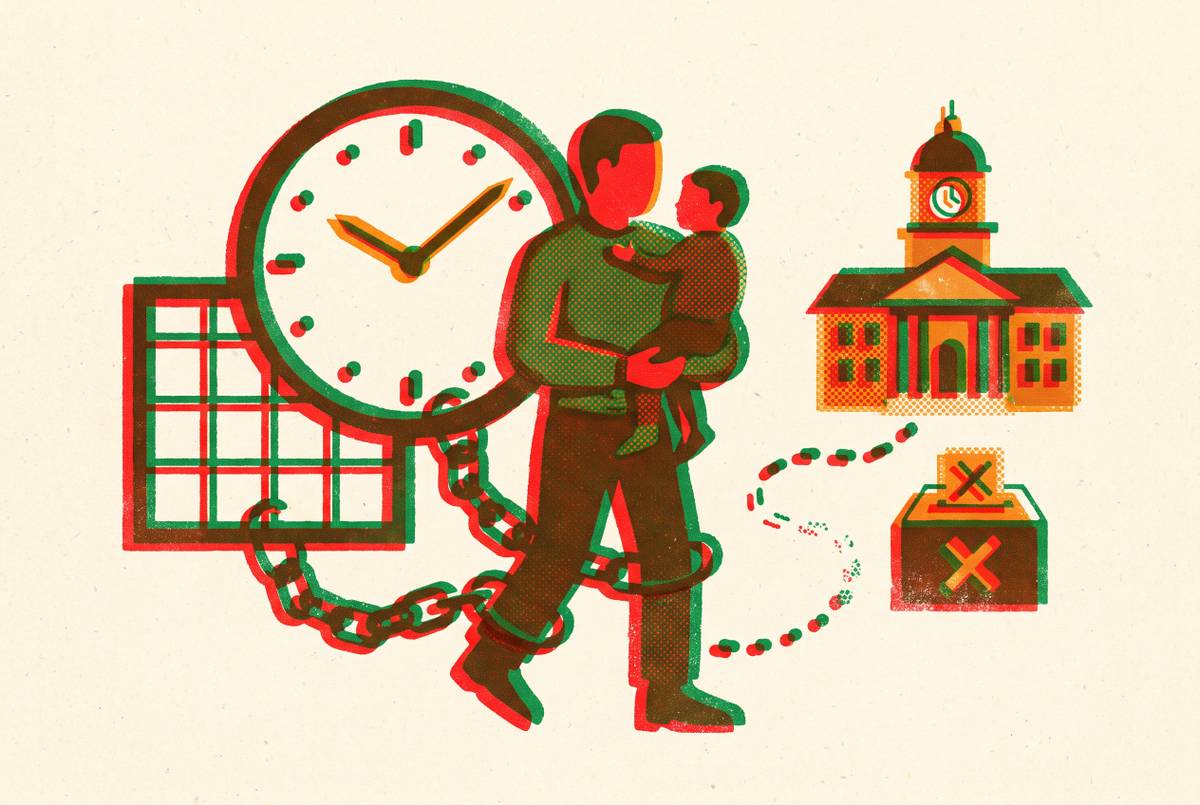
M.L. Smith, founder and director of the Missouri Justice Coalition, is herself formerly incarcerated, and she describes a friend who spent more than two decades paying taxes, renting an apartment, and holding down work, all without ever being allowed to cast a ballot. It is also long enough, under the wrong state's laws, to be fully shut out of deciding who represents that community.
What happens to civic participation beyond voting
Voting is the most visible restriction, but it's far from the only one. Formerly incarcerated people can also be barred from serving on federal juries, from holding certain federal positions or appointments (though the Constitution does not bar people with felony convictions from most elected federal offices), from enlisting in the military, and from participating in or receiving certain federal contracts or social service programs.
Housing restrictions compound the problem in a way that's easy to underestimate. Renters with felony convictions are frequently turned away from subsidized housing, and without a stable address, the basic machinery of civic life, attending a public meeting, keeping a voter registration current, showing up to local governance, becomes difficult to sustain in any consistent way. Employment barriers, education barriers, and restricted access to government resources add on top of that, so what you get is not one rule but a stack of them, each reinforcing the others. Advocates have a name for this whole bundle: collateral consequences, the restrictions that trail a person long after the sentence itself has ended. Disenfranchisement is just the most visible piece of a much larger structure.
Why legal restoration of rights doesn't ensure participation
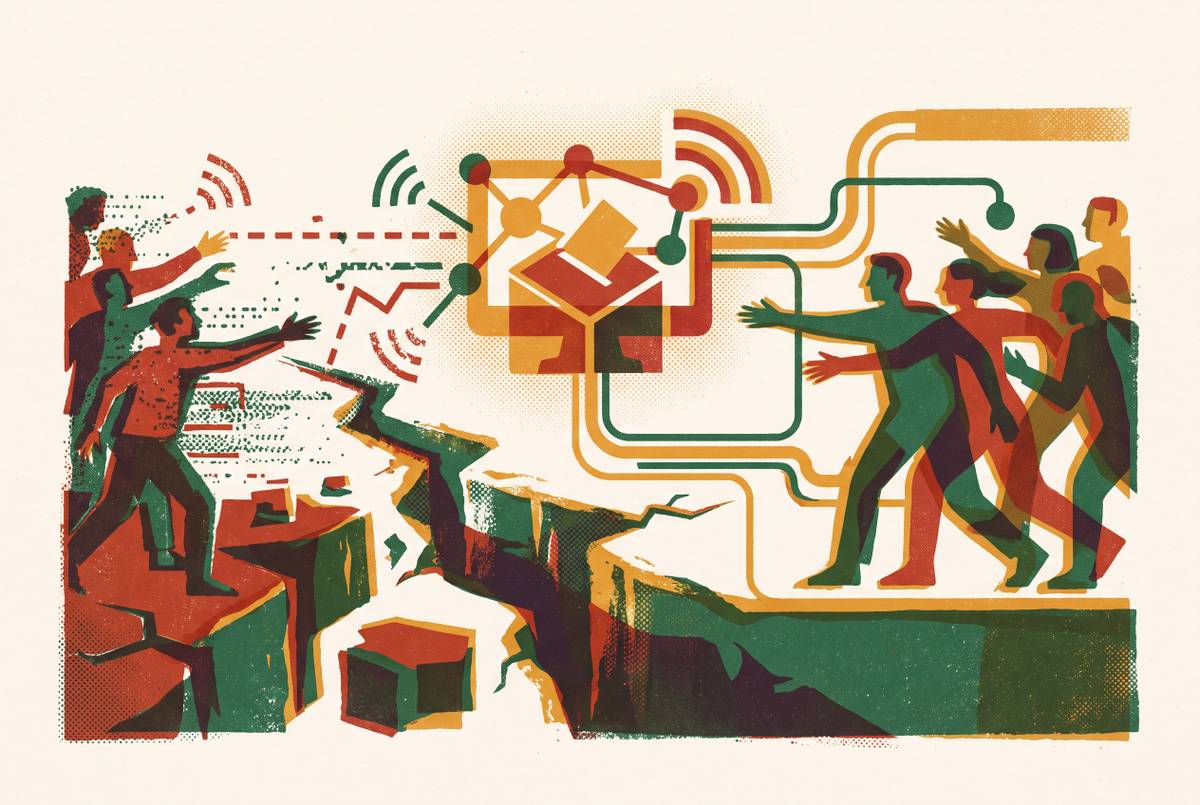
Getting the legal right to vote back is necessary, but it isn't sufficient on its own. Confusion, debt, lack of internet access, and distrust of institutions can all keep someone off the voter rolls just as effectively as a statute can.
Confusion alone keeps enormous numbers of eligible people from voting. Jonathan Topaz of the ACLU's Voting Rights Project has said that convoluted rights restoration laws have resulted in voter confusion about eligibility among returning citizens. People who are, as a matter of law, fully eligible to vote often have no idea, and the burden of figuring that out falls on them, not on the state that took the right away.
Money makes this worse. In many states, restoration is conditioned on paying off fines, fees, costs, and restitution in full, which effectively reinstates disenfranchisement through a financial back door, something Topaz calls a "pay-to-vote system". Florida's Amendment 4 shows how this plays out. Voters passed the amendment in 2018 to restore voting rights to people with prior felony convictions, excluding murder and felony sexual offenses. Gov. Ron DeSantis then signed SB 7066, which redefined "completion of sentence" to include full payment of any ordered restitution, fines, fees, or costs. A reform that a majority of Florida voters approved at the ballot box was narrowed almost immediately through statute, reinstating the very financial barrier the amendment had been written to remove.
Digital exclusion adds another layer. People who served long sentences often return to a world where voter registration, public meetings, and civic information all live online, and many lack stable internet access or the digital literacy to navigate those platforms. Institutional distrust, while harder to quantify, is visible in how people who've been through the criminal legal system describe their relationship to government processes, including the electoral ones meant to represent them.
The argument against restoring rights
The most serious case against restoring voting rights to people with felony convictions holds that breaking the social contract forfeits a say in shaping it, and that a felony conviction demonstrates a kind of judgment unfit for political decision-making, a summary Ballotpedia lays out in its overview of the debate. It's a coherent argument on its face. But does it hold up against what actually happens when people are reconnected to civic life?
The evidence points the other way. Civic participation, including voting, has been linked to lower recidivism rates; when formerly incarcerated people are tied into their communities through pro-social activity like voting, recidivism goes down. That finding cuts directly against the premise of disenfranchisement. If the goal is a safer, more stable community, cutting someone off from civic life works against that goal rather than serving it. Isolation doesn't produce accountability. It produces more of the disconnection that made reintegration hard. Even granting the disenfranchisement argument's own terms, the policy delivers the opposite of what it promises.
How civic change on this issue happens
Reform moves through several different channels, referenda, state legislatures, courts, and federal action, and each one has its own strengths along with its own ceiling.
Citizen referenda can move fast, sometimes faster than any legislature would move on its own, but they're also exposed to rollback after the fact. Florida's Amendment 4 is the clearest case: a majority of Florida voters passed it in 2018, and the legislature narrowed it almost immediately through SB 7066.
State legislatures, by contrast, tend to produce smaller but more durable gains. Missouri's House Bill 1871, effective August 28, 2026, restores rights for some people on parole or probation for nonviolent offenses, though advocates note the scope was narrowed during negotiation and see further expansion as the next fight. Virginia's Question 3, on the ballot November 3, 2026, would go further still: amending the state constitution to automatically restore voting rights upon release from incarceration, while still requiring completion of parole, probation, and payment of fines. That would end a system that currently requires a personal act of restoration from the governor.
Courts can also reshape the landscape, sometimes sharply. In 2026, the U.S. District Court for the Eastern District of Virginia ruled in King v. O'Bannon that felons can only lose voting rights for offenses that were recognized as common-law felonies in 1870, the year Virginia was readmitted to the Union, a ruling that narrows the scope of disenfranchisement considerably.
Federal legislation, meanwhile, has gone nowhere. H.R. 6643, which would abolish felon disenfranchisement in federal elections, and S. 4217, which would secure federal voting rights for people released under the First Step Act, have both been referred to the Judiciary Committee in their respective chambers with no further action since. That raises an important question: if the federal track is stalled, where does the real momentum come from? Increasingly, it comes from the ground up, from organizers working directly with the people these laws affect.
How peer-led organizing closes the gap
Legal eligibility and actual participation are two different things, and the organizations closing that gap tend to share one feature: the people doing the outreach have lived through the same system as the people they're reaching.
The credibility of the messenger is the mechanism here.
In Travis County, Texas, Robert Tyrone Lilly, who is himself formerly incarcerated, led an effort called "Fighting Injustice at the Ballot Box," recruiting other justice-impacted people as research captains who reached into their own networks to talk about voter registration. Lilly framed the work as a continuation of a longer civil rights struggle.
In Pittsburgh, the League of Women Voters of Greater Pittsburgh has partnered with the Black Political Empowerment Project, known as B-PEP, to register voters inside the county jail for several years running. In 2025 alone, volunteers registered more than 233 individuals and helped 260 incarcerated people apply for absentee ballots.
The thread connecting all three efforts is trust built through shared experience. People who have been through the system are believed in a way that officials, pamphlets, and government websites rarely manage. For anyone building tools or programs meant to serve this population, that's the detail to hold onto: the channel the message travels through matters as much as the message itself.
Sources
- 2026 Virginia Voting Rights Restoration Amendment
- Felony disenfranchisement in Virginia
- Restoration of Voting Rights for Felons
- New Missouri law gives voting rights back to select former prisoners
- www.mapresearch.org Voting Rights for Formerly Incarcerated People
- Arguments for and against automatic restoration of voting rights for people convicted of a felony - Ballotpedia
- New Sentencing Project Report Reveals 4 Million Americans Denied Voting Rights Due to Felony Convictions
- Racism & Felony Disenfranchisement: An Intertwined History Erin Kelley