Youth-Led Legislative Campaigns That Produced State Law
Young people shape laws by entering the legislative process at multiple stages, not just one.
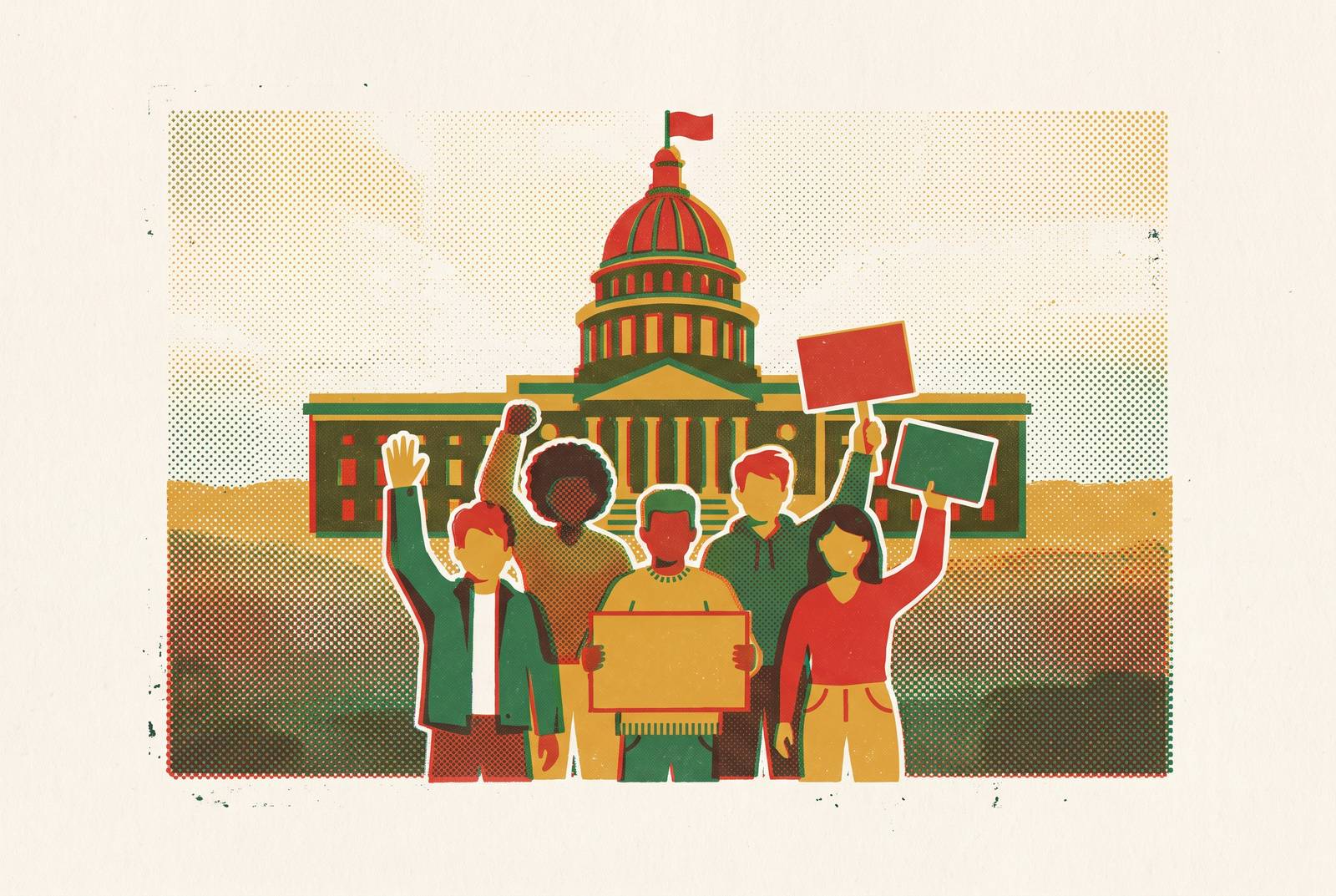
Louisiana's Legislative Youth Advisory Council did something most civic programs only simulate: it produced an actual bill, signed by Governor Kathleen Blanco on June 25, 2007. You have to sit with the puzzle of why that campaign reached the governor's desk while so many similarly earnest, similarly well-organized youth efforts die quietly in committee. The difference has less to do with how much young people cared or how good their issue was, and more to do with how the campaign moved through the legislative process itself. Tracing that mechanism, case by case, shows a repeatable pattern: campaigns that reach a governor's desk enter the process at multiple points, build community backing lawmakers can point to, and hand legislators a proposal in a form they can actually use.
The standard legislative sequence and its entry points for youth campaigns
Every state, regardless of its politics or its size, runs bills through the same four stages: drafting, committee testimony, floor vote, and gubernatorial signature. Because the sequence doesn't change from state to state, a strategy that works in Louisiana or Nevada can transfer, with adjustment, almost anywhere else.
Most youth campaigns show up at only one stage: the petition drive, the public comment period, the op-ed. The ones that become law tend to show up at several. When young people help shape the actual language of a bill at the drafting stage, before it's introduced, they aren't just reacting to text someone else already wrote. At the committee stage, testimony from people directly affected by a policy carries a kind of evidentiary weight that outside lobbying doesn't replicate. At the floor stage, vote-counting and coalition-building matter, and when young lawmakers build relationships across party lines, that has decided more and more close votes. At the signature stage, direct outreach to the governor's office, letters, organized constituent contact, has historically been part of what pushes a bill from "passed" to "signed."
Louisiana's LYAC was created by state law, made up entirely of high school students, and it hit all four of these points in sequence. Students helped draft the bill, met with key state officials, testified before legislative committees, and then watched Governor Blanco sign it into law in June 2007. It's what happens when a youth campaign treats the legislative process as a system with multiple doors, not a single gate.
California Youth Connection's three-decade record of legislative staying power
California Youth Connection, founded in 1988, offers the clearest evidence that the multi-entry approach isn't a one-time trick. CYC runs an annual cycle: members collectively choose one legislative priority for the year, develop actual legislative language rather than just a position paper, testify and educate policymakers directly, and write letters to the governor to keep pressure on through the signature stage. Youth sit at the center of every one of those steps as decision-makers inside the organization.
The record this cycle has produced spans decades: dozens of laws since 1988, including landmark legislation establishing legal rights for children and youth in foster care, legislation that became a model other states later drew from. That kind of output doesn't come from a single well-run campaign. It comes from treating the legislative cycle as something to run every year, the way a business runs a budget cycle, rather than something to attempt once and hope works.
The model is still running. In 2024, CYC's "Not These Cuts, Not These Kids" campaign fought to protect foster youth services during that year's state budget negotiations, and funding for FURS, HNMP, and SILP was restored, preserving support for placement safety, housing, and transitional resources for youth leaving foster care. Because of CYC's ongoing legislative pipeline, counties now have to compare their placement rates against state averages, starting in January 2027. CYC was founded thirty-six years ago, and it is still shaping active legislation. That's what staying power actually looks like in this space: not a single win remembered fondly, but a pipeline still producing results.
How direct youth input shaped the substance of specific bills
What would have been missing from these bills without youth input? That question separates genuine co-authorship from campaigns where young people just show up to validate a decision adults already made.
Take the California juvenile justice bill. Youth advocates ran focus groups with young people who had direct experience in the justice system, and two provisions made it into the bill as a result: clean water and timely access to toilets. Neither is the kind of detail a policy staffer drafting from an office would likely think to include. It appeared because people who had actually lived inside the system were given room to name what they needed, and someone wrote it down as law. The working group behind that bill included the Anti-Recidivism Coalition, California Youth Connection, and the Young Women's Freedom Center, and high school students from the California Association of Student Councils shaped and pushed it from the first drafts to final passage.
Louisiana's LYAC students worked the same way. They weren't brought in to react to language that already existed. They were challenged directly to help draft legislation meaningful to young people statewide, and they took that challenge and produced language that became law.
Lining these cases up reveals a pattern. When youth are brought in only at the testimony stage, they confirm that a bill is a good idea. When they're brought in at the drafting stage, they change what the bill actually says, and bills shaped this way tend to be harder for opponents to argue against, because the objections a critic might raise, like the lack of basic facilities for detained youth, have already been answered by the people the bill is meant to help.
What bipartisan youth coalitions in state legislatures have achieved
Some of the most notable youth-driven legislative wins came from young elected officials who built relationships across party lines strong enough to survive a difficult vote.
In Oklahoma, State Rep. Daniel Pae, a Republican, and State Sen. Together with Carri Hicks, a Democrat, he built their working relationship in the state's Future Caucus, where they served as co-chairs alongside other legislators. Because that relationship existed before any specific bill did, they could identify an opportunity to collaborate on legislation tackling the state's opioid epidemic. The bill passed and was signed into law, and according to its authors, it has already saved hundreds of lives.
In Mississippi, Rep. Jeramey Anderson, a Democrat, and former Rep. Toby Barker, a Republican who was later Mayor of Hattiesburg and now serves as the city's independent mayor, built a relationship over years. That relationship eventually made a bipartisan vote possible, one that redesigned the state flag, a bill conventional wisdom had written off as politically impossible.
What connects these two cases is that the relationship came first and the legislation came second. Both pairs of lawmakers say they worked together out of frustration with a political status quo they saw as stuck, not out of ideological moderation. Their individual views span a wide range of the political spectrum. What they share is impatience with gridlock, and a willingness to invest in a relationship with someone on the other side of the aisle before there was a specific bill on the table to negotiate.
Formal youth advisory structures and the infrastructure informal campaigns lack
The youth legislative victories with the most reliable track record tend to come out of formal structures, not informal organizing. Louisiana's LYAC is created by state law, so its access to the legislature doesn't depend on a sympathetic legislative session or one champion staying in office. The channel exists independent of any individual.
Nevada's Youth Legislature runs on a two-year term. The 2023-2025 cohort spent its first year on skills-building and its second year applying those skills to an actual bill, a sequencing that produces far more polished proposals than a single compressed effort would. An August 2024 Midterm Training in Carson City focused specifically on bill drafting, led by Legislative Counsel Bureau staff, and monthly meetings from September 2024 through January 2025 produced individual Bill Draft Requests that the full body presented, debated, and voted on. The result, Senate Bill 254, focused on improving outcomes for students struggling with substance abuse, and it was introduced in the 2025 Legislative Session. Youth Legislators presented it to the Senate Committee on Education on NYL Day at the Legislature, March 5, 2025, then kept working with legislators to refine it through the rest of the session. Training for that cohort included mock committee hearings with sitting legislators and LCB staff, a floor session run by a former state senator, and sessions on how lobbyists operate, so the transition into actual legislating wasn't a leap.
Similar infrastructure exists elsewhere. North Carolina's General Assembly runs a Youth Legislative Assembly, scheduled for March 13-15, 2026, a mock legislative session giving high school students direct exposure to committee review, floor debate, and voting procedure. The YMCA Texas Youth and Government Legislative Section trains participants to identify issues, research and write bills, and argue them through a process built to closely resemble the Texas Legislature, and it advances from district hearings to a state conference where selected bills reach a Youth Governor. Bills from the 2026 State Conference will become the following year's list of banned topics, just as enacted law in a real legislature forecloses redundant bills.
There's a fair objection to all this: formal structures filter youth voice through institutional gatekeepers, and something gets lost in that filtering. The concern isn't wrong. But the track record answers it anyway. Campaigns backed by formal structures pass bills more reliably than ad hoc efforts do, because institutional credibility is what lets a lawmaker turn testimony into legislative language and introduce it without hesitation.
How a proposal's format determines legislative action
A proposal only moves through the legislative process if it arrives in a form the process recognizes. A petition is not a bill. A public comment is not testimony. A social media campaign is not a constituent contact record a legislator's office can log and cite. Campaigns with strong public support still stall when they ignore this, because no stage of the legislative sequence has a slot for "popular idea with no draft language attached."
CYC's model includes developing actual legislative language every year, not just a position statement, so the draft a legislator receives is already something close to what could be introduced. Nevada's NYL produces its proposal as a formal Bill Draft Request through the Legislative Counsel Bureau, the same mechanism any sitting legislator uses, so SB 254 arrived in committee looking like any other bill, not like a student project someone would need to translate into legal language first. Louisiana's LYAC students drafted the bill text directly, so the language that eventually reached the governor's desk was shaped by the students who proposed it in the first place, not rewritten by someone else along the way.
The same format gap appears at the local level, often worse. Residents with a clear, specific community need frequently have no accessible way to turn that need into a document a city council member or state representative could actually introduce. That's the opening for civic technology that converts plain-language ideas into properly structured legislative drafts and attaches verified, named community co-signatures, giving a serious local proposal the same structural credibility that formal youth bodies provide by default.
What the campaigns that stalled had in common
Line up the campaigns that never made it out of committee next to the ones that reached a governor's desk, and a consistent profile appears on the losing side. They entered the process late, usually at the advocacy or petition stage, after the drafting work was already finished by someone else. They delivered their proposals in formats the legislative process doesn't recognize as actionable: a petition instead of draft text, a hashtag instead of a Bill Draft Request. And they built public enthusiasm, but they didn't build the kind of verified, organized community backing that gives a lawmaker political cover to vote yes.
The cases that worked point to the opposite instinct at every one of those same points. Louisiana's LYAC, California Youth Connection, Nevada's NYL, and the bipartisan pairs in Oklahoma and Mississippi didn't wait for testimony day to get involved. They were in the room during drafting. That is where clean water and bathroom access got written into a California bill, and where Louisiana students shaped language a governor would eventually sign. They produced text a legislator could introduce without rewriting it first, the way CYC does every year and the way Nevada's Bill Draft Request process requires. They sustained their work across multiple legislative cycles rather than treating one session as a single shot, the way CYC's record stretches from 1988 to its still-active 2024 budget fight. And in the legislatures themselves, the lawmakers who moved the hardest bills, an opioid bill in Oklahoma, a flag redesign in Mississippi, built the cross-partisan relationships that made those votes possible well before either bill existed.
None of this requires young people to wait for permission or to be older before engaging seriously with legislative process. You have to treat the process as a system with specific entry points, specific formats, and specific credibility requirements, the same system an experienced lobbyist studies before a first meeting with a committee chair. The students in Louisiana, Nevada, and California who reached a governor's desk didn't do it because their cause was more urgent than everyone else's. They did it because they learned where the doors were, and walked through more than one of them.